
amazing art

Experiential Entertainment

Something experiential comes from the real world… from an experience.

Sand Animation is a form of experiential storytelling, performed live at: conferences, conventions, company parties, gala events and trade shows. A sand animation performance cultivates a successful and constructive learning environment. Leaders can view sand art experiences as learning opportunities that can be valuable for their organizations, and help their employees to see these experiences as great chances for growth and development.

Sand Artist | Charlene Lanzel performing LIVE at a holiday event.

It is vital for leaders to adjust their approach for solving new challenges. By practicing a new approach, like a sand animation experience, leaders can have more enjoyable and effective interactions with their employees while maximizing learning potential. Approaches are reinvented through experiential sand storytelling to improve strategy and effectiveness. Sand animation simulations can mimic real situations, to help in the learning process without real-world consequences. It creates a deeper understanding of a complex topic in a risk-free setting.
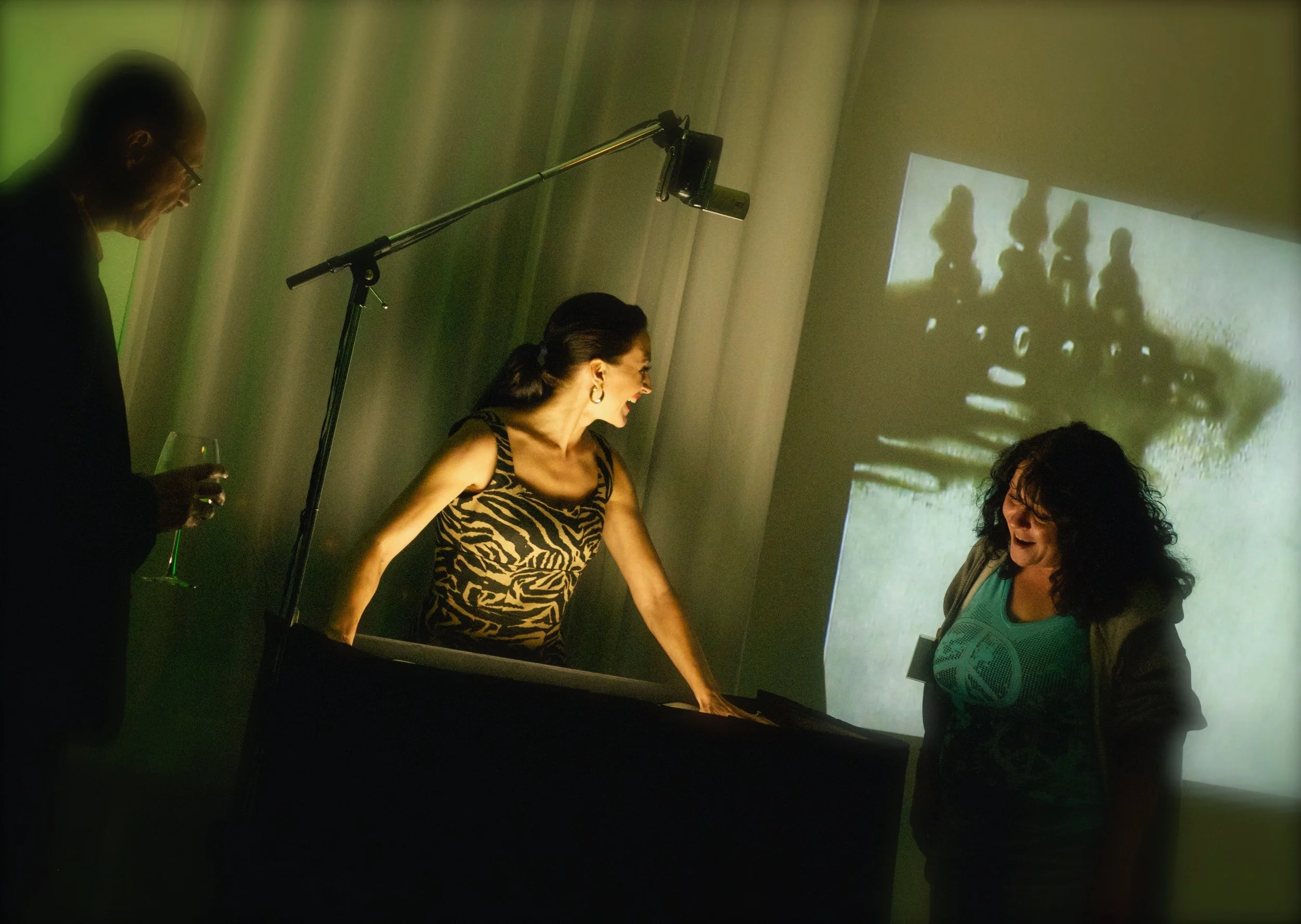
Sand Artist | Charlene Lanzel performing LIVE at a company party.

For team members to continue to refine their skills and grow as professionals, in the most efficient and effective manner, experiential learning helps them to comprehend by actively engaging in an experience. The aim is to deepen understanding and develop better skills. For people to become more effective and capable in their work, a sand animator’s scenarios represent potential situations, aiming to prepare employees for situations encountered in their professional lives. They are actively participating in the learning experience.

Sand Artist | Charlene Lanzel performing LIVE at a trade show.

Experiential entertainment makes employees think about a topic differently. It encourages community and social bonding through a shared, immersive activity, while promoting creativity and learning, strengthening relationships and building a sense of belonging. It persuades people to share experiences created in a unique way. This makes them start talking about an event… and even creating a ripple effect. Experiential sand animation performances can boost morale, engagement, and collaboration among employees.

A standing ovation for Charlene’s LIVE conference performance!

Sand animation experiences are immersive, emotional, and unforgettable performances that go beyond traditional marketing formats. They are a great way to educate, entertain, and inform. Unique and engaging events grab attention, creating lasting memories and emotional bonds. They make information stand out, and lead to higher engagement and interest.

Experiential sand animation storytelling provides a unique, memorable and enriching experience. 

Little Snowhite - Lofi Sand Art Fairytale

Here's a new sand art story I've just released on YouTube... I've been working on this for a long, long time (over 5 years), and I hope you enjoy it. Not only did I create the illustrations in sand, but this is also my first attempt at creating the music that syncs with the sand art, as well!

These illustrations are just a preview... I'm still learning the animation.

I'm currently looking for venues to perform this sand animation live. If you know of a good venue for me to perform this animation, let me know in the comment section below.

"Little Snowhite" is based on the original Grimm's fairytale "Sneewittchen", which was first recorded by the brothers Jacob & Wilhelm Grimm in 1812. The timeless story is thought to have been based on the life of Margarete von Waldeck, a German countess born to Philip IV in 1533. She was forced to run away to Brussels, where she fell in love with a prince, who would later become Phillip II of Spain... Once upon a time. Fairytales are written for adults, with the intention that they should be shown to children, to teach them about the unfortunate evils of the world.

Read more about Sand Art STORYTELLING!

Interview with Sand Artist | Charlene Lanzel

1. How did you first discover sand art/sand animation, and what was the most important deciding factor in you wanting to do it?

Sand animation was pioneered by Caroline Leaf in 1968 with her animated film project “Sand, or Peter and the Wolf” for an undergraduate class at Harvard University. As a child, in 1973-74, I saw two animations by Eli Noyes, another Harvard graduate, on the PBS television program Sesame Street. They showed his animated films “Sandman” and “Sand Alphabet”. I was really fascinated with it, but at 6 years old I was a bit too young to think about doing it myself. By 1989, I started working as a professional artist and mural painter. In 2004, I saw a video of Hungarian artist Ferenc Cakó’s live sand animation performance being passed around in the early days of the internet. Cakó was responsible for turning sand animation into a live performance. At this point, I had been working as a fine artist and muralist for many years already. In 2009, a Ukrainian sand artist, Kseniya Simonova won “Ukraine’s Got Talent” with her emotional sand animation performance. Her sand video went viral around the world. A associate of mine mentioned that sand animation was becoming desirable for corporate entertainment and events. Mural painting work had become scarce, due to advances in digital technology. I needed something new to do, a new way to make a living. I knew I had the necessary skills and experience to do it. So, I spent a year teaching myself sand animation, and posted my first sand video on YouTube in January 2011. Two weeks later I was scouted to perform at a party for Cirque du Soleil, and I’ve been traveling around creating sand animations ever since. One of the things that I love most about sand animation is that it is an ephemeral art form. It lasts only in the moment, and requires the living presence of the artist to happen.

2. Do you believe that creating art is just a hobby, or something much more? Why or why not?

For me, making art was always something I wanted to do for a living. I told my mother I wanted to be a commercial artist when I grew up. I started painting at age 5 and never stopped creating. Art is what I’m best at, and something that I can contribute to society. Being a professional artist is not an easy path. It requires focus, hard work and determination. It’s not for everyone. It’s for someone with an entrepreneurial mind, as well as a good skill set. I started out as a window display artist and through that I began painting murals. I’ve done fine art paintings and shown my work in galleries. I’ve worked for jewelry designers, and made my own jewelry as well. I have also worked as a sign painter and a street painter. It’s important to be flexible and to be aware of trends.

3. What is a message you would like to send to those who may want to pursue an art form such as this?

Sand animation is an advanced art form which requires a huge amount of time, hard work, focus, patience and practice. You will need drawing skills, an understanding of shadow & light, a dancer’s flow and coordination, and a steady hand. It may not come easily. There will be a lot of trial, error and mistakes. Don’t be afraid to make mistakes. Learn from them. You will also want to learn music and film editing as you grow into the art form.

4. Did you ever experience someone ridiculing or mocking you for doing this, and if so, how did you overcome it?

All of my life, people have told me that I couldn’t be, shouldn’t be, and wouldn’t be an artist. I’ve proven them all wrong. When someone tells you that you can’t, it’s usually because they can’t. The cause is often jealousy and fear. Listen to your heart and do what’s right for you.

Charlene Lanzel_Sand Artist_Kyocera.jpg

5. In your opinion, what is the most difficult thing about sand animation?

The most difficult part of sand animation are the transitions from scene to scene. You want a smooth flow from one image to the next. It has to look pretty in all stages of development, even when scenes are changing. Synching with a soundtrack is also challenging. There’s a lot of back and forth between the music and the artwork, until a time balance is achieved.

6. How long do you plan to continue with sand animation, and what would you do after?

I plan to do sand animation as long as I can earn a living at it. Hopefully, that will be for a long time. But, because it is so time consuming, if the work flow stops I’ll have to put my focus elsewhere. I’ll keep making sand art films, even if I stop performing live. I’ll stop when I run out of ideas. After that, who knows. Something creative, for sure. As long as I’m creating, I’m happy. Happiness is my goal in life.

7. If you weren’t doing sand animation, or it had never been created, what would you be doing right now instead? Why did you choose not to do that thing?

If sand animation had never been created, I would be painting, which is what I did before and still do. I like trying new things. I’ve thought about creating sand mandalas, but I don’t like working outdoors on hot pavement. I also do acting, sometimes, but I’m a bit shy with my voice.

8. What impact do you believe your artwork has made on the community?

People have often told me that my sand art is inspiring. It inspires a sense of awe. It tells stories and showcases new ideas. It makes people happy... and that’s the goal. Happiness.

9. Who has been your biggest motivator to continue doing what you love? How does this person inspire you?

David Bowie always inspired me, just by being his unique self. :)

Interview by Chloe Docks, a student at South Elgin High School, doing a project for her English class by researching information about sand art.